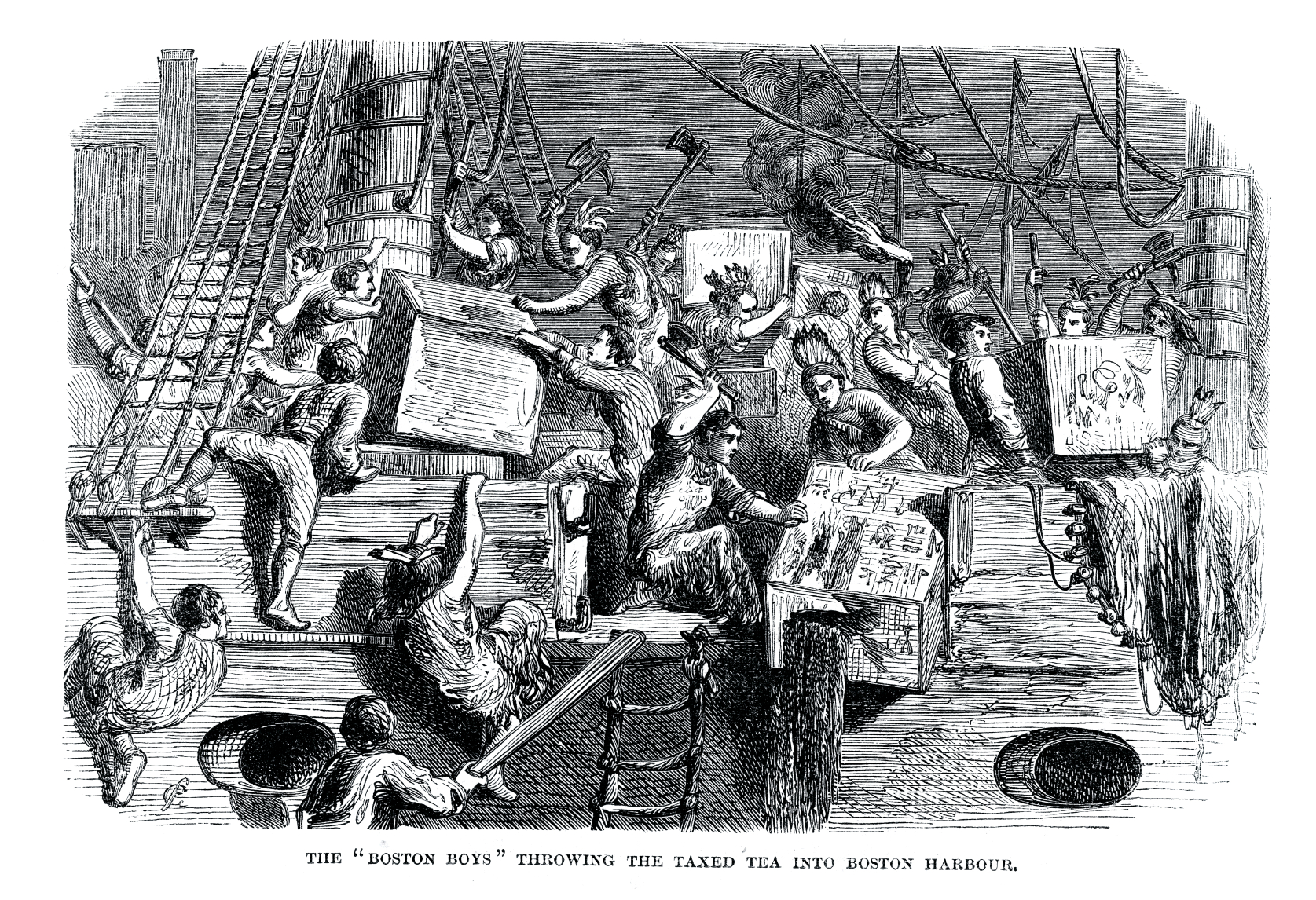
My last post featured editorial kudos for the EPA’s evenhanded approach to regulation of one aspect of drilling: handling of methane and volatile organic compounds during fracking.  Perhaps the accolades were premature.  I speak of the recently exposed and widely distributed video of the then-new and recently-resigned EPA Region 6 director Al Armendariz invoking an inappropriate analogy to his “philosphy” of regulating oil and gas producers. If you haven’ t seen it yet, you  are too late. You Tube removed the video from its web site.

Mr. Armendariz said:  “The Romans used to conquer little villages in the Mediterranean. They’d go into a little Turkish town somewhere, they’d find the first five guys they saw and they would crucify them.” 

To be fair, earlier in the video he referred to enforcement against producers who break the law. He could have been referring to the scofflaws as the only candidates for immediate crucifixion. Unfortunately, that’s not what he said.  

Mr. Armendariz apologized and resigned, and the White House declared the comments to be “entirely inaccurate as a characterizaton of the work the EPA does”. Whether or not you believe that, it raises questions about the agenda behind recent EPA enforcement actions.   

We now know who the wolf is, and we now know that it comes disguised in the sheep’s clothing of a seemingly reasonable regulation (assuming that a 588-page regulation is reasonable, but that is for another day).  We should expect that regardless of the winner, after the next election there will be big changes in the EPA’s approach to the energy industry.  If the status quo remains, the wolf will  throw off its sheep’s disguise and the crucifixions will resume. 

The current EPA:


The real EPA, to be revealed in November should the status quo remain:


“The wolf will live with the lamb,

the leopard will lie down with the goat,

the calf and the lion and the yearling together . . .”

(Isaiah 11:6)

What does the Old Testament have to do with the oil business? It seems the EPA’s new rules on the capture of methane and volatile organic compounds resulting from fracking have generated favorable reviews by factions in our political world that do not ordinarily agree on anything. The rule is an unholy 588 pages, you are warned if you want to read it, but the reviews are interesting.

The New York Times described the rules as “a win for the environment, for the public and for industry”.

The Wall Street Journal , surprised, in an editorial entitled “The EPA’s Fracking Miracle” praised the EPA for using ‘restraint”.

The Mother Nature Network opined that “. . . somehow, against all odds, it seems to be working.” , in referring to the new rules. And further , “not everyone is thrilled, but no one seems outraged, either.

According to the American Petroleum Institute, “The EPA has made some improvements in the rules that allow our companies to continue reducing emissions while producing the oil and natural gas our country needs.

Not everyone is thrilled, or even satisfied. The Bloomberg Report asked, “Does the Obama administration care about air quality? It isn’t always easy to tell . . ”, complaining that the rule will not go into effect until 2015.  Several other editorials and articles reveal serious areas of disagreement, and there are plenty of other dissenters. The Houston Chronicle reported on a few.   But the relative harmony suggests that much could be gained by common sense and compromise.

Wolves and lions being what they are, the story isn’t over (Remember the scorpion who hitched a ride across the river with the frog. It was a bad ending for the frog). It doesn’t matter who you consider to be the wolves and lions in the national debate over our energy future. One could predict that they will join the lambs and the calves in the celestial choir only until the next regulation, or environmental mishap, or election.


In a recent entry on the blog Exxon Perspectives, the huge producer presents a number of reasons why relying on compressed natural gas as a transportation fuel might be misplaced, at least for the near future. Among the obstacles:

  • Vehicle costs are high
  • Infrastructure is nonexistent and costs will be high
  •  CNG has lower energy density than gasoline and therefore less efficient

ExxonMobil’s answer:

  • Wait for LNG to develop. It is a better vehicle fuel
  • Let the market, not the government, decide
  • Use CNG to fuel fleets, but not your car or mine

To get a fuller perspective, read the comments posted after the entry, where the Exxon viewpoint is either “so biased it’s pathetic”, “misleading”, or worse. The commentors argue with Exxon, then they argue with each other.  Dislike for “Big Oil” is palpable. 

Pro-CNG web sites www.cngchat.com and www.cngnow.com are mentioned.  The latter appears to be sponsored by natural gas producers.  Query: Why would ExxonMobil (the biggest natural gas producer in the continental US?) be against CNG vehicles if there weren’t good economic reasons to be against it?  Maybe theyare right. 

In encourging news for natural gas producers, the Federal Energy Regulatory Commission approved construction of Cheniere Energy Inc.’s $4.5 Billion LNG export facility at its existing import terminal in Hackberry, Cameron Parish, Louisiana.   Also, Sempra Energy, Inc. will invest $6 Billion in an LNG export facility at Lake Charles.  Sempra has an import terminal at the same location.  Quite a turnaround in the natural gas markets, and boon for employment in southwestern Louisiana.

And there is even more to look forward to regarding federal regulation of domestic oil and gas exploration:


So said the lessor-plaintiffs in Walker v. Chesapeake Louisiana, L.P. The lessee-defendant, the trial court, and the court of appeals said “Yes, but . . .”. The lessors accused the lessee of breaching six leases and sought cancellation. The court invoked the doctrine of “judicial control” that allows a court to avoid cancellation when equity requires it.

The “Gotcha” Lease

The leases had three provisions that the lessee allegedly breached:

  • There would be no surface operations without the lessor’s consent (Operations were minimal and there was no damage to the land);
  • Subject to a mutually agreed data license agreement, the lessee was required to furnish lessor certain information regarding wells on the premises (The agreement hadn’t been negotiated, and the lessee contacted the lessor the day after receiving a demand for cancellation);
  • If a seismic permit was obtained within one mile of the premises, the lessee must negotiate in good faith to include the premises and surrounding acreage in the seismic coverage (The court construed this clause in lessee’s favor, so there was no breach).

The Court’s View

La.  Civil Code Art. 2013 allows judicial dissolution of a contract when the obligor fails to perform.  There are several ways for a court to let a breaching lessee off the hook in the face of a claim for lease cancellation. Louisiana, like virtually all states, frowns upon forfeiture of a contract. This is especially true, said the court, where the breach is not substantial and there is no injury to the lessor. Such was the case here.

The court also pointed to a Louisiana case that discussed the “good faith” of the breaching party, holding that the court would deny cancellation if the breach was of minor importance and was caused by no fault of the obligor or is based on a good faith mistake of fact.

Takeaways

This case has several lessons for all of us.

  • Lessor: You have the right to enforce each unreasonable provision in your lease, or enforce each reasonable provision in an unreasonble way. But don’t expect every court to be enthusiastic about helping you. Listen to this advice:   http://www.youtube.com/watch?v=kn481KcjvMo 
  • Lessee: Resist unreasonable lease terms when you can.  You might survive a fight over arbitrary or unreasonable lease terms, but it will be troublesome and expensive. You don’t want to have to rely on equity (a/k/a, the court’s mercy) to avoid a bad result.
  • Landman: When your geologist says that without that certain tract her favorite prospect will be worthless and the company’s future doomed, warn her how painful it will be when the lessor insists on enforcing the “gotcha” lease that you will have to live with. And don’t fall for aw-shucks platitudes from the lessor: “Gosh, I wouldn’t ever enforce any of this stuff. I don’t even understand it, but my lawyer says I need it to keep people like you honest”.
  • Out-of-state lessee who has been sued on the lessor’s home turf: Think about getting to the federal courthouse. See my March 27, 2012, post to see what can happen if you don’t.

The Back Story?

Just as history is written by the victors, opinions are written by the judges who see facts and equities in a certain way. Rare is the losing party who agrees. Any analysis of a decision is based on what you see in the opinion, which is usually a lot less than everything that happened.

With that caveat, let’s speculate. One can see what motivations might have been in play here. The leases were signed in 2008 for land in Caddo Parish. Looks like a good Haynesville well was drilled when gas prices were far higher than the anemic sub-$2.00 now being paid. The lessors refused to negotiate with the lessee over the breaches, and the suit swung for the fences: nothing less that cancellation of all six leases. The result would be a windfall – ownership of a nice well after the lessee risked millions of dollars to buy the leases and drill the wells.

In my never-ending effort to improve my position in life by associating with people who are smarter and more knowledgable than I am (my wife being a notable example), this entry is by noted environmental lawyer Cynthia Bishop (cbishop@cbishoplaw.com) on a topic that is important to anyone in the energy business.

Cindy Bishop

If your E&P or service company is growing quickly, you could be overlooking environmental regulations that are triggered by the very growth and success your hard work has achieved. Fortunately, the EPA and many states, including Texas and Oklahoma, have voluntary disclosure or internal audit programs that can waive or greatly reduce penalties.

Most environmental regulations apply to operations with a capacity (such as throughput or equipment size) above a certain threshold. As a result, many startup companies are exempt at the outset of their operations, but later fall under permitting or reporting requirements as they expand. Examples are spill prevention plans, air permits, and annual EPA Form “R” reports. These companies are so focused on meeting the increased demand that they sometimes do not think about environmental compliance.

The disclosure programs allow a company to audit itself and then disclose and correct any violations identified during the audit. In return for the self-disclosure and corrective action, the agency will waive or greatly reduce typical penalties. Each audit program contains specific requirements that must be met in order to qualify for the penalty waiver, so be sure to check with applicable guidlines and regulations.

See the EPA’s Audit Policy

See the TCEQ Audit Privilege Act

The Oklahoma law can be found at OAC 252:4-9-5(a).

Invoking the spirit of Emily Litella, the Environmental Protection Agency offered a govenmental “never mind” when it withdrew its emergency order that attempted to hold Range Resources responsible for contamination of drinking water on Parker County, Texas, well sites under the federal Safe Drinking Water Act.

 Those who have followed this case know that several investigations into the EPA’s assertions showed no link between Range’s operations and water contamination. For example, a Texas Railroad Commission investigation more than a year ago concluded that Range did not contaminate the water wells.

This retreat should have happened a long time (say, about $4.2 million in Range legal fees) ago, but be assured this action is no indication that the EPA intends to abandon its efforts to regulate fracking.  Nor, one could suspect, does it signal the end of the EPA’s resolve to challenge oil and gas production. So much for “science-based regulation”.

For contrasting viewpoints on the subject, see the Wall Street Journal article, and especially the 127 (at last count) comments, and a Texas blogger with a decidedly different – one could say hysterical – sentiments about this case and fracking in general.

Remember the Wilford Brimley character in The Firm? “I get paid to be suspicious when I’ve got nothing to be suspicious about.” Shell Oil Company v. Ross commands you to think like Mr. Brimley. If you suspect your lessee is not paying proper royalties, do not wait to investigate. Even if you don’t suspect anything is amiss, investigate anyway or you will lose your right to sue. The Texas Supreme Court has reaffirmed the heavy burden imposed on a royalty owner to discover he is being underpaid by his lessee.

The Suit

Mr. Ross didn’t take Mr. Brimley’s advice, perhaps because he wasn’t working for the Mob.  He was dealing with a major oil and gas producer. Mr. Ross owned royalty interests in wells operated by Shell. The lease royalty was 1/8th of the amount realized. The state had a 50% royalty interest and was paid independently of the plaintiffs. For some unexplained reason, Shell paid what the court referred to as an “arbitrary price”, and Shell’s the best explanation at trial was that it “made a mistake”.

Mr. Ross was a lawyer who did oil and gas work. The suit was for fraudulent concealment, accusing Shell of withholding sufficient information for him to determine that they were being paid less than they should have been.

The Rationale

The “discovery rule” can stop the running of limitations on a fraudulent concealment claim. The court reiterated the test for the rule to apply in Texas litigation: The injury must be “inherently undiscoverable and objectively verifiable.” The test is administered on a “categorical basis”. There are no exceptions!

The court identified several sources of “readily accessible and publically available information” that could have lead the royalty owner, if he had used “reasonable diligence” to discover he had been underpaid.

Among those sources was the El Paso Permian Basin Index which, according to the court, would have revealed that the royalties being paid were too low. Another was the records of the Texas General Land Office, which did not reveal the price Shell paid to the state on the same land, but “would have revealed that Shell was underpaying” the Rosses. The opinion also suggests that Mr. Ross could have “ask[ed] the companies Shell sold the gas to the price they paid …”. The court did not handicap the likelihood of the success of such a request.

A Few Questions

• If Shell merely “made a mistake”, why didn’t the company go ahead and pay what it admitted it owed? (Granted, this one is more ethical than legal)

• Should the “inherently undiscoverable/objectively verifiable” test be tempered by, say, a requirement that the royalty owner have some reason to believe he is being underpaid in the first place? Must a royalty owner assume that everybody is out to underpay him? The court says “yes”. Constant vigilance is the standard. Generalized mistrust is the word of the day.  Think like Mr. Brimley, the Mob enforcer.

• How many royalty owners are sophisticated enough to look at sources like those mentioned by the court? I would say, not very many. How much success would a small royalty owner have when she asks the pipeline how much the large producer was paid on one lease? Not much, I would say.

A lessee, operator, and contract driller were found to be a “single business enterprise” for the purpose of imposing statutory penalties and attorney fees for failure to pay royalties.  The principle is that if one corporation is wholly under the control of another, the fact is it is a separate entity does not relieve the controlling entity from liability.  The law considers the former corporation to be merely an alter ego of the latter.

Louisiana law imposes statutory penalties on a lessee who fails to pay royalties. Oracle 1031 Exchange, LLC was the actual lessee and Oracle Oil LLC and Delphi Oil, Inc. were the operator and the contract driller.

What is required for one entity to be “wholly under the control” of another?  (1) Delphi and/or Oracle paid royalties from the well; (2) Delphi and/or Oracle received the checks for selling the oil produced from the well; (3) Delphi and/or Oracle paid the severance taxes; (4) all three entities are headed by the same person; and (5) Exchange appeared to be insolvent (by the fact that it appealed devolutively – without a bond or other means to suspend the effect of the judgment).  From all of this, the court concluded that Oracle and Delphi were wholly under the control of Exchange and were Exchange’s alter ego.

One possible reason the court passed liability for underpayment on to Exchange could be that but for the court’s treatment of Oracle and Delphi as, in effect, lessees, the royalty owners would have had no recourse for recovery of their unpaid royalties.

All states do not recognize this theory of recovery.  For example, efforts by plaintiffs in Texas to convince the Supreme Court to adopt this standard have been unsuccessful.

Oracle 1031 Exchange , LLC v. Bourque

With apologies to Click and Clack, from time to time I will post “puzzlers”, questions about title and similar issues that have no apparent answer.  Here is the first one: 

Joe Bob Joiner owns a non-participating royalty interest under a tract.  The amount of interest he owns is tied to the amount of royalty stated in any lease affecting the tract. (i.e. he retains “½ x 3/16 lessor’s royalty”).  Daisy Bradford, the owner of 100% of the minerals on the tract, believes it is her destiny to be the H. L. Hunt of the 21st century and decides to go into the oil business by developing the minerals herself.  Therefore there is no oil and gas lease on the tract.  She drills a well and, lo and behold,  it is a producer!  What interest does Joe Bob the NPRI owner have in production from the tract?


If you were wondering whether the debate over the safety and effectiveness of hydraulic fracturing has entered our national conciousness, check this out: 


In a serious approach to the issue, the opinion magazine National Review recently joined in the conversation in a piece by Kevin Williamson, The Truth About Fracking – What the Protestors Don’t Know.  The focus is on the Marcellus Shale, but his thesis applies everywhere there is horizontal drilling and fracking.  These days, that is a lot of places. 

Among his observations:

  •  The Pennsylvania Department of Environmental Protection receives high marks for competence and its application of common sense in regulating the handling of frack water.
  • On the other hand is the fear that the EPA will adopt a top-down, one-size-fits-all aproach to fracking and frack-fluid regulation, ignoring the differences in geology and other factors in different producing areas.
  • The industry is addressing the troublesome aspects of fracking.  Frack water is being treated in innovative ways by companies like TerraAqua Resource Management. 
  • Producers like Fort Worth-based Range Resources are recognized for responsible environmental practices and efforts to minmize the impact of drilling on local communities.   
  • George Mitchell, and not your federal government, gets the credit for having the vision, conducting the research, and taking the enormous financial risks necessary to develop modern fracking techniques.
  • He reveals distortions of fact presented in Gasland, the documentary allleging that a Colorado farmer’s tap water caught fire because of fracking. In fact, tap water in that community has been catching fire since at least the 1930’s.
  • Natural gas development is responsible for thousands of new jobs in areas that need them, a fact that we Texans and our neighbors in Louisiana and Oklahoma have known for decades.