
Co-author Gunner West
In Healthy Gulf v. Secretary, Louisiana Department of Natural Resources, the Louisiana Third Circuit Court of Appeal affirmed coastal use permits issued by the Office of Coastal Management (OCM) to Venture Global for its CP2 LNG export terminal and supply pipeline. The court rejected the argument by the environmental group plaintiff that a terminal site almost entirely outside the coastal zone required denial. Such a site is one alternative to weigh in evaluating a permit application, not an automatic bar.
Two permits for CP2 LNG
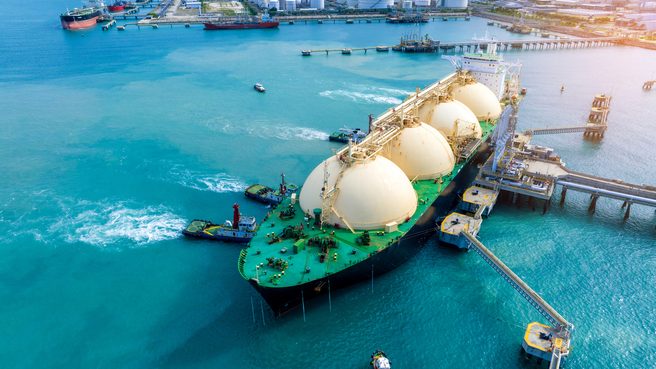
The terminal covers 737 acres along the Calcasieu Ship Channel in Cameron Parish. The pipeline runs 85 miles, 45 of them inside the coastal zone, and includes a 40-acre compressor station. The project will affect large areas of wetlands, and Venture Global must mitigate unavoidable permanent impacts. Relying on FERC’s parallel environmental review, OCM issued both permits in March 2024; the Cameron Parish district court affirmed.
The no-deference amendment
A recent amendment to Louisiana’s Administrative Procedure Act bars courts from deferring to an agency’s interpretation of a statute or rule. The Court applied the law retroactively and concluded it overrules case law giving “considerable weight” to agency readings of their own rules. The Court still deferred to OCM’s weighing of the facts and its permit decisions, which it reviewed for arbitrariness.
The compressor station and the storm surge wall
Healthy Gulf and other plaintiffs argued that OCM never applied the guidelines to the compressor station or its integrated carbon capture system. The Court found that OCM’s “Basis of Decision” covered the station as part of the pipeline project, including FERC’s air quality and noise findings, and that OCM’s path could “reasonably be discerned.” Carbon capture wells, the court noted, are permitted by a separate office and would, if anything, support the permit.
Healthy Gulf also argued that a concrete storm surge wall around the station was a “levee,” triggering more specific guidelines. The regulations define a levee as a use that creates an “embankment” to control water. Common usage of the term “embankment” does not typically contemplate a concrete wall around industrial equipment.
Alternative sites
The guidelines require a use to avoid significant adverse impacts identified in the guidelines “to the maximum extent practicable.” Otherwise OCM must make three findings:
- benefits clearly outweigh impacts;
- no feasible and practical alternative locations, methods, and practices would comply; and
- the use will produce significant public benefits or serve important regional, state, or national interests.
Healthy Gulf’s outside-the-zone site would also have eliminated the pipeline’s coastal segment. Every alternative would affect more wetlands and there were other disadvantages. Per Venture Global’s application, the selected site was already disturbed by oil and gas operations, fill, and agriculture. The first alternative would affect four times as much estuarine wetland and stretch carrier transit from three hours to eight or nine. The second, overlapping the first, also affected forestland and posed marine safety challenges. The third would affect more than five times as much, and its pipeline would cross wildlife refuges. The approved pipeline route avoided Sabine National Wildlife Refuge and the public oyster seed grounds in Calcasieu Lake.
The court held that Healthy Gulf’s reading would require denial of an application whenever a site outside the zone was available. That is because moving outside the zone always avoids impacts within it.
Commercial fishing and the public trust
Responding to Healthy Gulf’s concern about harm to commercial fishermen from LNG carrier traffic, the Court noted that the statute and guidelines require minimizing impacts only where feasible and practical and avoiding only significant ones. FERC found the effect of carrier delays moderate but not significant. Even if significant, it was being avoided to the maximum extent practicable.
The Court rejected a public trust claim under the Louisiana Constitution as duplicative, reading “welfare of the people” to include economic development in conjunction with preservation of resources.
Your musical interludes. You don’t understand the words in Cajun music? It doesn’t matter. The dead white guys didn’t even use words and it worked for them.
A waltz is usually a lament. You have permission to be melancholy when you hear it. A two-step is happy. Its an invite to commence the hip-shaking.